Forty percent of people may not retain skincare arithmetic, yet a single figure persists: skin begins to lose hyaluronic acid at 25 years old. Many people assume a stronger home device can reverse that slow depletion on its own, and that assumption deserves testing. Shelves crowded with serums and buzzing tools now send many buyers back to a professional for judgment.
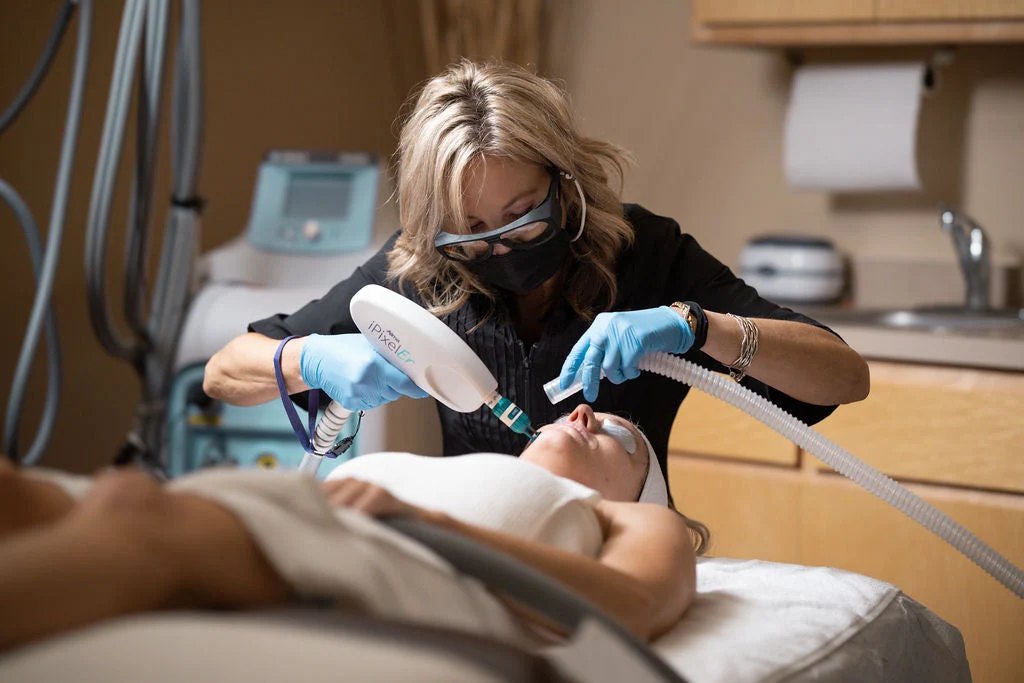
Massachusetts requires written proof of at least 16 hours of instruction in each exfoliating service before an aesthetician may provide microdermabrasion or dermaplaning confined to the epidermis, with 10 hours devoted to practical training. A regulation like that can look like paperwork, but it also describes care as learned pressure, hygiene and restraint. Esthetics means the study and practice of tending skin to support its health and appearance, joining science, artistry and wellness. Estheticians are trained professionals who deliver facials, waxing and makeup applications in professional spa settings. After ten years in which much of this work shifted into bathrooms, treatment rooms are full again because judgment often counts more than wattage.
Skill before wattage
Consumer and professional equipment differ fundamentally in energy output, since products for unsupervised use stay capped at low energy while professional equipment reaches higher energy and demands training plus safety protocols. The cap exists for safety, and safety limits outcomes. Red LED near 630 to 660 nanometers supports collagen production and lowers inflammation, while home masks run at lower intensity than professional panels. Home microcurrent units create subtle and temporary toning and contouring that needs almost daily application to persist. Consumer radiofrequency units run far below professional RF systems and cannot produce the controlled thermal injury needed for meaningful collagen remodeling.
That contrast does not make home tools worthless. Home LED masks may deliver real though modest gains with steady daily use and pair well with professional care. Scale is the issue. A mask worn each morning supports calm appearance and hydration. A professional panel, positioned at the proper distance and dose, performs heavier work on a less frequent schedule. Home IPL units give modest hair reduction at energy far beneath professional laser hair removal and seldom produce permanent clearance. Consumer dermarollers and pens cannot reach professional needling depths and may lead to scarring, infection or pigmentation without sterile setting and technique.
A capable esthetician works within those gradients. The face is more than a platform for product. Professor Wild first proposed the term exposome in oncology research in 2005 for the many extrinsic factors that shape aging beside the genome. Sun, air, sleep, food and outdoor labor all register. Dr. Kligman introduced the term cosmeceuticals in 1984 during experiments on tretinoin and aging. Hyaluronic acid has a deeper lineage. Its first clinical application was developed in the 1970s and 1980s for ophthalmic surgery. Hyaluronic acid shows hygroscopic, rheological and viscoelastic properties and appears in cosmeceuticals for hydration and antiaging effects.
That background informs one practical sequence. One 24-week randomized controlled trial evaluated a 1.5 percent multimolecular weight hyaluronic acid filler serum applied twice daily from 24 hours after Botulinum toxin type A, with SPF 50 plus sunscreen used in both arms. For evidence minded readers, sequencing carries weight alongside formula: procedure, then daily humectant layering, then sun cover, sustained across months. A practitioner enforces that pattern. A bottle by itself cannot.
A license promises restraint, while a device promises intensity.
What scope permits, and what it protects
Contemporary esthetics joins traditional methods with newer technologies such as LED facials and advanced exfoliation. The present revival also mixes classic technique with tools such as LED facials and advanced exfoliation, so it does not reject technology. Cleansing, steam, extraction, massage and mask endure. Light and cautious exfoliation supplement them. Licensing bodies such as the Illinois Department of Financial and Professional Regulation stress education and continuing education in esthetics. Continuity belongs to the craft. The same observer watches skin through seasons and records where redness remains, where barrier feels fragile, where cold-season air has roughened cheeks.
Scope varies by state and many advanced services stay restricted, so no single facialist can provide peels, light devices, microneedling or lymphatic work under identical terms. In Texas, a licensed esthetician may perform body hair removal, beautifying treatments of face neck shoulders or arms, cleansing treatments of face neck scalp shoulders or arms, eyelash extensions, and massage of scalp neck shoulders arms or face by hand or device. Under Texas rules, an esthetician may not perform hair services, hand or foot beautification, mustache or beard services, nail treatments, shaving face or neck, or hair weaving. The boundary keeps practice clear and legible.
Massachusetts sets its boundary with special precision. Massachusetts policy amended December 23, 2025 bars Board-licensed cosmetologists, aestheticians, manicurists, barbers or electrologists from giving injections including Botox and dermal fillers such as collagen and hyaluronic acid. In Massachusetts, aestheticians may perform photofacials with Intense Pulsed Light under the Board Policy on Intense Pulsed Light Devices, plus hair removal. By comparison in Massachusetts, chemical peels or combinations that act beyond the epidermis are prohibited, including phenol, trichloroacetic acid, Jessners solution, AHA solutions with pH lower than pH 3.0 and higher concentration BHA salicylic acid services. Similarly in Massachusetts, microneedling, nanoneedling or microchanneling that enters the dermis is prohibited, while techniques that remain in the epidermis are permitted.
Those limits safeguard clients and define competence. Competence is not the strongest acid. It means honoring hygiene, patch testing, pressure, timing and referral when an issue belongs with a clinician. US beauty licensing arose from Progressive Era sanitation concerns including barbers itch transmitted by unsterilized razors, which led to state boards governing training and hygiene. The treatment room continues that ethic. Clean towels, clean hands, clean extraction implements, careful records. A device offers intensity. A license offers restraint.
Choosing care on the evidence
Price comparison is nuanced because home devices demand daily time, replacement parts and serums, while misuse may generate correction costs. A collection of gadgets can quietly exceed the price of a quarterly facial, particularly when serums require repeat purchase to maintain current. Professional care and home care function best together. The professional supplies assessment, deep cleansing, careful exfoliation within scope, LED where available, and a plan for intervals between appointments. Home care supplies gentle cleansing, moisturizing ingredients that support the appearance of hydration, and sun protection.
Sound selection depends on license, training and scope rather than the strongest peel or newest gadget. Ask where the license was issued and whether continuing education is current. Ask which exfoliation remains inside the epidermis and which training backs it. Ask how light devices are operated, at what distance and for what duration, and what aftercare is advised. A careful practitioner will discuss barrier, treatment spacing, and when to pause. A hasty one will pledge depth and speed.
Botanical ingredients fit comfortably inside this slower framework. An infused oil or root extract merits interest for behavior on intact skin: softening the look of dryness, supporting the appearance of suppleness, easing massage. A practitioner familiar with plants will weave them into routine instead of layering them toward aggression. Favor lower heat, lighter friction, and closer observation. Patience governs good cultivation. The same patience should govern professional skin care.
What evidence cannot yet answer should remain open. There is no clear picture of how busy treatment rooms are now versus the home device peak, in bookings, prices or retention. They do not show which facial techniques or product combinations produce the best sustained outcomes across skin types. Therefore they do not show how clients should balance maintenance home devices against visit frequency for cost and time. Candor about those gaps supports better choice.
The renewed interest is understandable on those terms. Humectant stores thin from early adulthood, the outside world presses inward, home tools operate at low energy, and a trained person provides what current cannot be programmed to supply: attention over time, clean technique, and readiness to do less when less is wiser.

Madeline Hawkins
Madeline runs the news desk and the evidence guides at Face Value. She reads the methods section before the abstract and keeps a tally of every study a press release cites, next to the number she could actually find.
More from Madeline Hawkins →