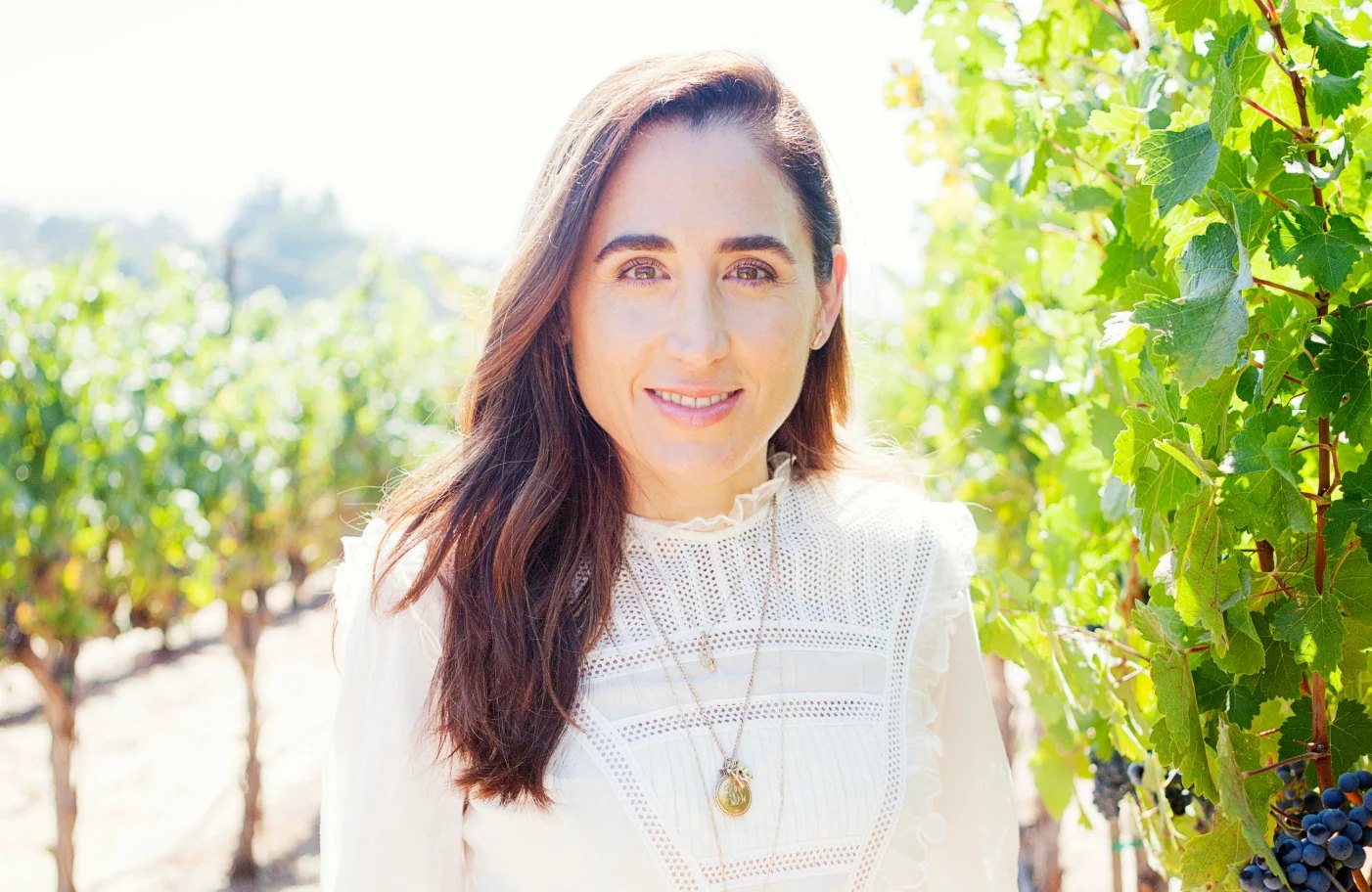
Alli Reed taught herself to formulate by reading dermatology journals and Reddit threads, and she made her first moisturizer at home in the evenings while working as an advertising copywriter. A decade later Stratia makes every product in its own Los Angeles lab, excludes fragrance and essential oils, and gets the color of its bestselling lotion from two oils pressed from sea buckthorn. Here she describes the test a plant has to pass to make it into one of her formulas.
For years Alli Reed credited nothing she did for her skin, because she did nothing. As a girl she had a clear complexion by luck, and her advice to friends was to wash with body wash and a loofah. The luck ended in her early twenties. Reed had studied chemistry, and as a child had hoped to dig up dinosaurs for a living, so she handled the problem the way she handles most things and went looking for data. Dermatology journals pointed her to the skincare forums on Reddit, the forums pointed her to a blog, and the blog pointed her to a moisturizer she mixed at home once her workday as an advertising writer was over.
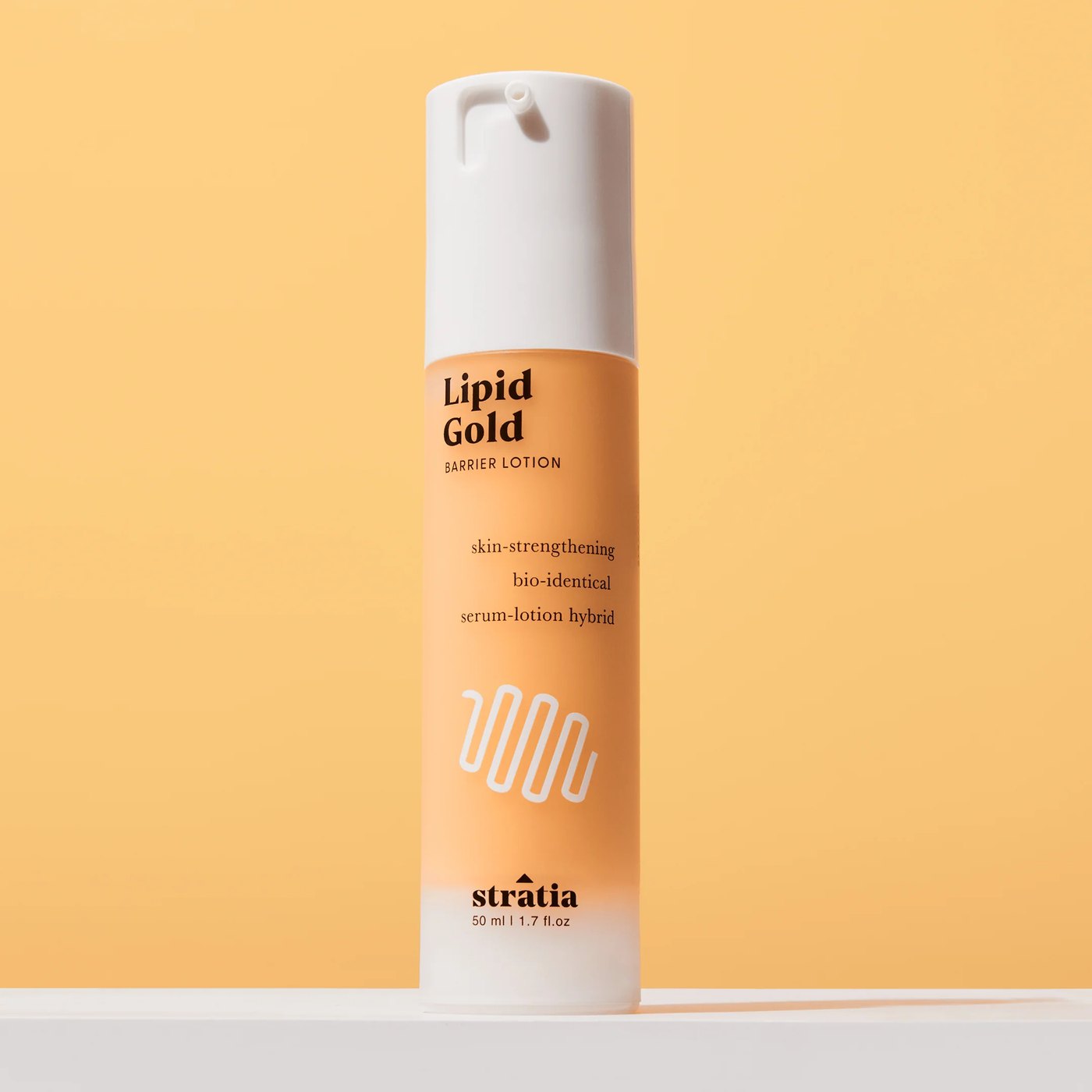
That product launched in May 2016 as Liquid Gold, priced at $24, in an opening run of eight bottles. Its design came from barrier research and rested on a set proportion of ceramides, cholesterol and fatty acids. Within a year Reed had quit her job. It has since been renamed Lipid Gold, it costs $29, and it remains Stratia’s best seller. The company formulates and makes its products in its own Los Angeles building, and its mission statement is short: skincare researched to an obsessive degree, for anyone who has skin.
A botanical title might hesitate before interviewing her, and it would have reason to. Stratia’s About page asks readers to drop the clean-washing and the elaborate rituals, and Reed has no time for a formula that sells itself on ingredient romance. No product contains fragrance, alcohol or essential oils. Silicones and parabens are included deliberately, and the glossary on the brand’s site gives the reason for each.
For a magazine that reads formulas closely, the interesting part is that plants appear on those ingredient lists all the same. Two sea buckthorn oils give Lipid Gold its yellow tint, and the formula also contains rosehip and cranberry seed oils. Interface, the brand’s peptide cream, contains licorice root. No plant on the list is decorative. Each has a task, and that is the test we apply to a formula too: ask what the ingredient does in skin, then ask what shows it.
You told Refinery29 in 2018 that you once recommended washing with body wash and a loofah in the shower. What shifted when your own skin stopped behaving in your early twenties?
Much of this is penance for who I used to be. My skin was fine as a kid, and that came down to genetics rather than any routine. My advice to people who asked was worthless. Then, in my early twenties, years of doing nothing came due.
Whenever something catches my attention, I approach it as a scientist would. I’ve been a science nerd all my life. At school I wanted to be a paleontologist, then an astronomer, and I ended up studying chemistry at college. So I read widely: what was causing the problems on my skin, and which topical ingredients and formulas could change them. The literature on what helps skin and what does not is strong. What I lacked, standing in a shop, was any information about a product beyond what its marketing team let through. Stratia grew out of that gap.
Before Stratia, you were active on Reddit’s skincare forums and published formulas on your blog, The Acid Queen, and you posted your leftover batches to readers. What did that community teach you?
Reddit has communities that go very deep on research if that’s what you want. I was an active participant long before I considered making skincare of my own, let alone selling it. There I met a small group who made products at home with real scientific rigor. Their posts were less about mashing an avocado and more about where to buy propylene glycol in small quantities.
It was a hobby, and it filled a hole, because I missed working in a lab. Other people find satisfaction in cooking an elaborate dinner. For me it was researching a formula, making it, putting it on my skin and watching it work. I mailed leftover product to readers, and they kept asking for more.
The community also showed me what people care about and how they want to be addressed. When I started selling, the products were meant to answer a need people had already voiced.
Lipid Gold began in May 2016 as a formula “based on studies I’d read about a specific ratio of ceramides, cholesterol and fatty acids.” You made eight bottles at first. Why anchor a debut product to a ratio instead of a single star ingredient?
The ratio is what matters. Your moisture barrier is built like a brick wall. Flat skin cells are the bricks, and the mortar between them is a fatty blend of ceramides, cholesterol and fatty acids. If the mortar is weakened, you can have skin that is dry and oily together, very reactive, or prone to breakouts. The studies showed these three lipids acting together in proportion, which makes them a good model for copying and supporting the natural barrier.
I also couldn’t find anything like it. Cosmetic chemists want the most elegant, longest-lasting and nicest-smelling product, while biologists and dermatologists study what skin really needs, and the two groups don’t line up. I set out to make what I wanted to buy and couldn’t.
I treated it as a weekend hobby. My expectation was a few orders to pack and post on a Saturday. Hence eight bottles.

Two oils from one plant, sea buckthorn seed oil and sea buckthorn fruit oil, make Lipid Gold yellow, and the product page cautions that very fair skin can show a brief orange tint. Why keep an ingredient that needs a warning label?
It has earned the spot. Each ingredient in a product has a function, and sea buckthorn does heavy lifting for just two lines on the label. The fruit oil is a bright red and the seed oil a vivid orange, and both contain antioxidants, phytosterols and uncommon fatty acids. The formula exists to replenish the barrier’s lipids, so they fit. The same goes for rosehip oil, rich in linoleic and linolenic acid, and for cranberry seed oil, which carries a balanced blend of omega 3, 6 and 9.
The color is entirely natural, with no dye added to make it golden. It doesn’t stain, and on most skin it disappears as you apply it. People with very fair skin may see a faint orange cast for a while, and they might prefer to use it at bedtime only.
I would rather tell people that in advance than have them find out on the commute.
The About page on your site asks readers to drop “the clean-washing and overly complicated rituals.” Stratia leaves out fragrance, alcohol and essential oils, but uses silicones freely and parabens as preservatives. What would you say to a reader who thinks plant-derived means gentle?
My line follows function, not origin. The vogue for “free from” labels has pushed brands to make products free from huge lists of ingredients that are safe and work well. Attention goes to what a product lacks rather than what it is, and the result is pleasantly scented water.
So I exclude the common irritants that give skin nothing. Fragrance is one. Essential oils are another, and that says nothing against plants. It’s a judgment on scent, which does nothing for the barrier and ranks among the likeliest causes of a reactive face flaring up. Silicones, on the other hand, are entirely safe and highly effective, so we use them freely. Our parabens are safe, gentle and effective preservatives, and any product containing water needs one.
Following the trends could have earned Stratia a good deal more money. I only want to sell things that do their job. A good product is effective, pleasant to use and safe by design. Natural doesn’t appear in that list, and synthetic doesn’t either.
Natural isn’t on that list, and neither is synthetic.
Alli Reed
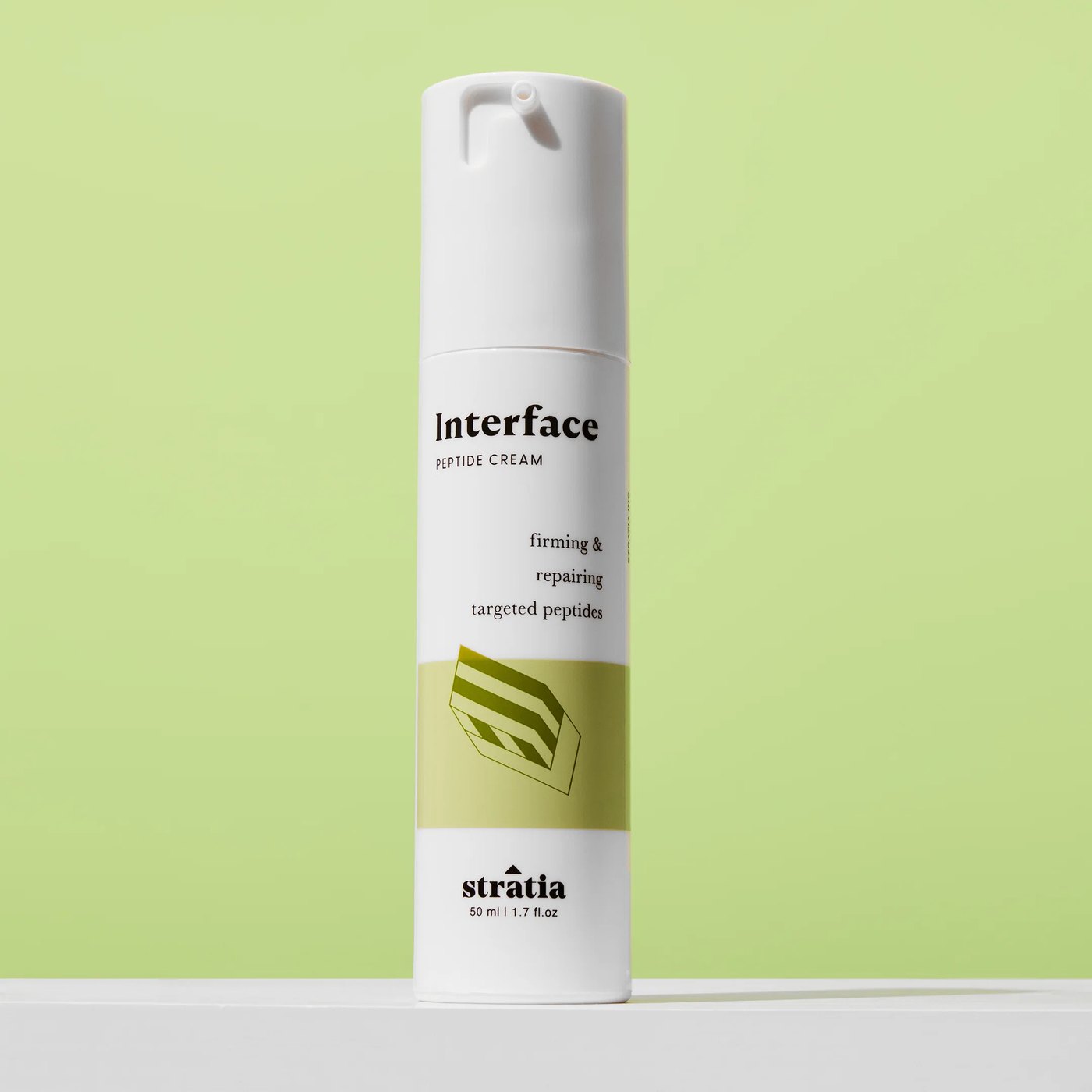
The Quality Edit heard you describe a peptide in 2023 as “a little Lego tower,” moved around in Interface by “microscopic taxi cabs.” That gel-cream also contains licorice root extract, rosehip seed oil and two emulsifiers derived from olives. What role do plants play in a peptide formula?
I find peptides fascinating. Each is a short string of amino acids, a bit like a little Lego tower, and the number of possible combinations is close to endless. Interface contains seven. A few were picked for the look of firmness and bounce, and others target important proteins in the skin barrier. The active peptides are held in a biocompatible shell lined with carrier peptides. These behave like microscopic taxi cabs and deliver the actives to the receptors they need, so they aren’t wasted elsewhere in the skin.
The plants play a supporting role, and I intend that kindly. Licorice root extract is included for brighter, calmer-looking skin. Rosehip seed oil provides linoleic and linolenic acid. Squalane, which comes from plants, hydrates without feeling heavy, and the emulsifiers from olives keep the oil and water phases together.
I tested endlessly and took apart a few moisturizers I love, until the gel-cream was deeply moisturizing and not at all greasy. Feel is part of quality for me, since a cream only works if you look forward to putting it on twice a day.
Stratia started in your kitchen, and by 2018 your first run of eight bottles had grown into 1,300 made in one day. You still formulate and produce everything in your own building at 2600 South Santa Fe Avenue in Los Angeles. What do you gain by keeping manufacturing in-house?
I began in my kitchen with a small chemistry setup, and as we expanded I kept enlarging the lab. In the early days I formulated, made and shipped everything from my apartment, so overhead was close to zero. No investors or mentors were around to tell me the next step, so I guessed as well as I could at how to make enough product without cutting corners on quality or safety.
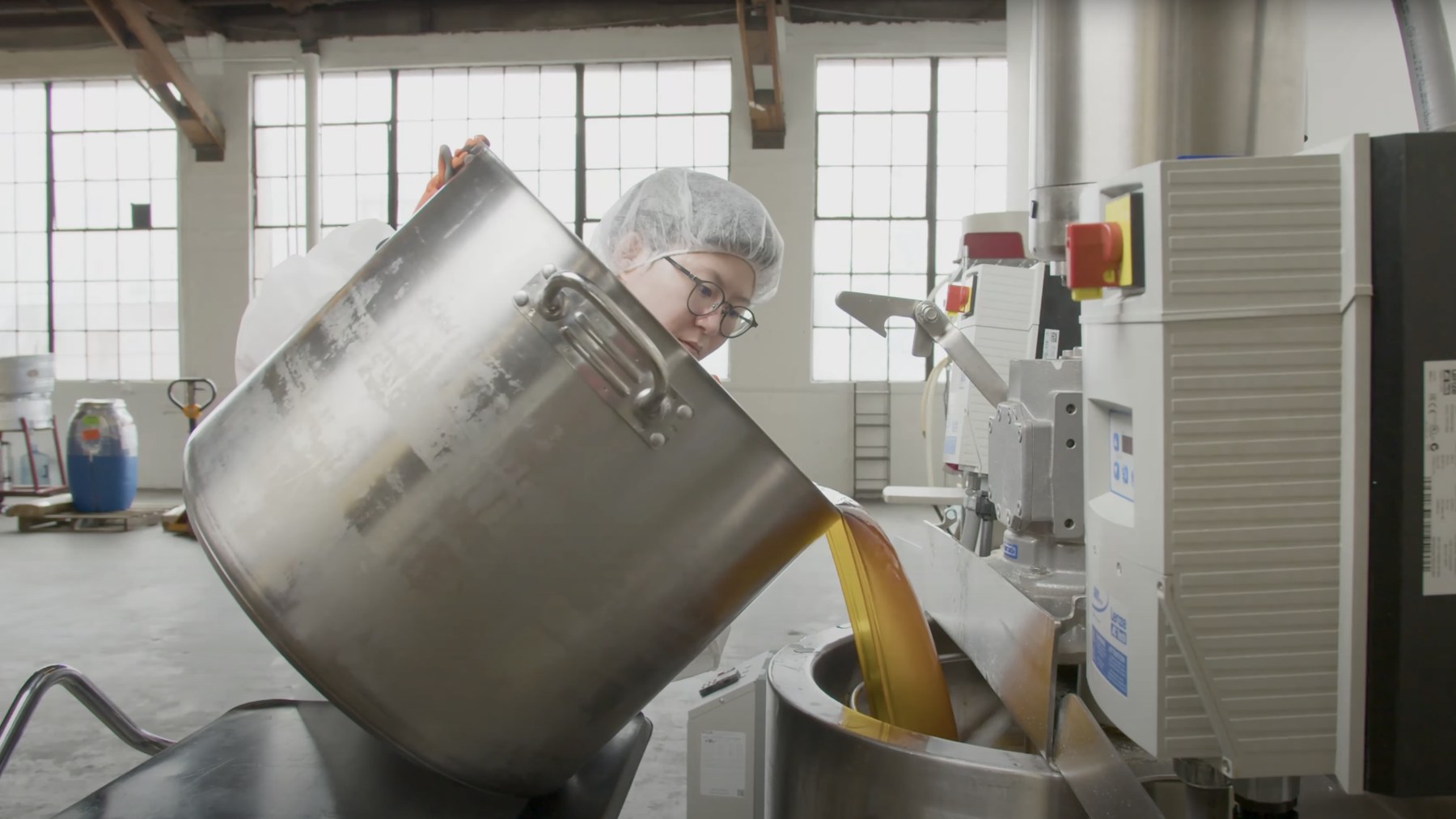
Making everything ourselves is something I’m very thankful for. We control sourcing, operating procedures and quality assurance end to end. It also keeps us agile: when a product sells out without warning, we can restock it within days. And we can show customers precisely how their skincare is made, because production happens in the building where the whole team works.
Prices stay where I want them as well. Formulating and manufacturing in-house, and putting less effort into marketing fads and more into research, lets us offer effective skincare people can afford.
In 2018 you said that announcing a vitamin C serum to fans a year and a half before it was ready taught you to stay quiet about products in development. The C+C Serum now combines 15% vitamin C with CoQ10, and Stratia releases one or two products a year. What does a formula have to get through first?
That serum was a lesson in humility. I announced it before I understood how many formulation problems it would raise, and a great deal can go wrong between an idea and a finished product. These days I say nothing until launch is nearly here.
The start is the enjoyable stage. I take several research journals and keep an eye out for new studies or ingredients that might become a product. I like to sketch a candidate formula in Excel and then try it at my small formulation station, which is where I’m happiest. Prototypes follow, many of them, and then our volunteer testers, of whom we have had about a thousand.
We go slowly on purpose. My aim is to make things I don’t believe have a match on the market. Where excellent, affordable versions already exist, I doubt I could add anything distinctive. A product only goes out if I think it’s good.
You started Stratia on “very meager savings,” were profitable by the second month and reached $2 million in sales in 2019. In November 2021 you accepted investment from Fable, the investment arm of Natura &Co. Why bring in a partner you did not need?
Fundraising was never necessary, because we had been profitable since the second month. For years we turned things down, including big retailers who wanted to carry us, since I needed to know that nobody else was deciding what we formulated or released next.
Later I wanted a partner who could bring best practices, so I wasn’t guessing. Everything I’d built came from trial and error, and a growing team deserves better than my best guesses.
Marketing follows the same pattern. Growth came through word of mouth, from people on Reddit and Instagram sharing the products. We will certainly not stake everything on Facebook ads. When brands ask how to market on Reddit, I tell them not to try it, because Reddit dislikes being marketed to. What succeeds is radical authenticity. It sounds like a marketing gimmick, but I mean it sincerely: trust completely in how good the product is and be very open with customers.
As of 2021, roughly one in five Stratia customers was male, roughly one in five lived outside the US, and close to half bought again. If a Face Value reader has reactive skin and a shelf full of oils, where do you suggest they start?
Begin with Lipid Gold. It suits every skin type, and it does particularly well on dehydrated or over-exfoliated skin, which covers many people who love skincare. Use one or two pumps, roughly a dime’s worth, morning and night. Normal to oily skin might need nothing more. Drier skin can layer a richer cream over it.
If you care about the look of firmness, Interface is the next step. It works well with other products, beneath makeup or over serums, and it can serve as your sole moisturizer as well.
After that, keep the routine brief. Ignore the scare tactics and the 30-step regimens and stick to the facts. I’d like people to feel excited about skincare and impressed by how remarkable their skin is. Healthy skin is beautiful skin, and it looks different on each person.
Closing note from the desk
Reed’s line is clear, and we found that useful. In a Stratia formula a plant is admitted like any other ingredient, by doing a job that can be stated in one sentence of the ingredient glossary. Sea buckthorn is there for its fatty acids and antioxidants, and the color comes with them. Essential oils are out because scent does nothing for the barrier. Silicones and parabens are in because they perform. We would add the usual note of caution: this is the founder’s account of why each ingredient is there, and the interview does not supply controlled-trial data for the finished products. As a statement of design logic, though, it is easy to check against the label.
Stratia set out to turn barrier research into bottles that anyone with skin could afford, made in a single Los Angeles building by the people who formulate them and explained one ingredient at a time. It started with eight bottles for a handful of Reddit readers. Ten years on, it still releases only what its founder believes is good.
Product spotlight
Lipid Gold, $29 for 50 ml or $53 for 100 ml. A light barrier lotion containing ceramides, cholesterol, fatty acids and niacinamide, intended to support the skin’s moisture barrier, and tinted yellow by two sea buckthorn oils. Use one or two pumps, around a dime’s worth, morning and night. Normal to oily skin may need nothing further, and drier skin can add a heavier cream on top.
Interface, $29 for 50 ml. A daily gel-cream with seven peptides, licorice root extract, rosehip seed oil, pro-vitamin B5 and hyaluronic acid, intended to help with the look of firmness and to support the moisture barrier. Use one or two pumps twice a day, alone as a moisturizer or over serums and under makeup.

Madeline Hawkins
Madeline runs the news desk and the evidence guides at Face Value. She reads the methods section before the abstract and keeps a tally of every study a press release cites, next to the number she could actually find.
More from Madeline Hawkins →