ROSEN Skincare started in a UCLA residence hall as an answer for skin that conventional blemish aisles overlooked. Founder Jamika Martin now works from Austin on formulas for breakouts in melanated skin, combining studied actives with plant extracts to address both active lesions and the persistent marks that remain. She discusses formulation choices, retail scale and why a smaller and more legible routine proves easier to maintain.
Jamika Martin never intended to lead a skin care label. She intended to settle her own complexion. After prolonged inflammatory breakouts that persisted through two courses of Accutane, she surveyed the Target blemish section and recognized only the aggressive cleansers she had used for ten years. None addressed her experience as a young Black woman managing ongoing lesions plus durable post inflammatory color.
So she began blending in her UCLA room, a native of Paso Robles testing through repetition what her complexion would tolerate. Rose is her middle name, which supplied the foundation for the label, although Rose alone suggested color cosmetics and Rosen remained. That modest edit captures much about the company that came next, gentle in tone and practical in purpose.
Today the company operates from Austin and distributes nationally, including a broad Ulta rollout to around 700 locations in April 2022. Its positioning is authentic acne care, supported by research and intended for real skin. What Face Value noticed is how disciplined the scope has remained. This is not blemish care framed as correction. It is everyday maintenance that acknowledges melanated skin, treats visible lesions as ordinary and includes residual discoloration within the same protocol.
What brought Face Value to this interview is the botanical reasoning inside that pragmatic claim. Tea tree, licorice extract, honey, lemon and strawberry extracts appear alongside niacinamide, zinc oxide and kojic acid. Martin does not present botanicals as story. She presents them in terms of sebum, visible brightness and adherence in younger users, then points to where controlled data exist and where they remain thin.
You finished a second course of Accutane nine months earlier and have described feeling afraid to start it at first and exhausted by your skin. What did those residence hall experiments involve, and which response convinced you the work extended beyond your own bathroom shelf?
Thanks for inviting me. I finished my second course of Accutane nine months prior. I felt afraid to try it initially, yet I reached such an exhausted point with my skin. Nothing from the drugstore kept me stable and the prescription path had drained me. In my residence hall I kept it basic, studying ingredient panels and testing milder bases with components I could identify. I was in my sophomore year at UCLA and then through my junior year, noting which formulas stung and which allowed my face to rest. Classmates began asking what I applied because my complexion appeared more settled. Then friends of those friends wrote. That response first indicated the project exceeded my own need. I never mapped a business. I mapped a way to cross campus without dense coverage. After other young women with comparable skin told me this was the first product that avoided stripping, I understood I needed to make it uniform and tested enough to distribute.
Your middle name is Rose and you have explained that Rose alone sounded like color cosmetics, which led to Rosen. Why was that separation important, and what does the revised name communicate about the line?
My middle name is Rose, and that provides the rose element, but I thought the single word sounded like makeup. I never wanted a listener to picture lip color or pressed powder upon hearing us. I wanted the word to signal skin care. Adding the N gave it the weight of a family name, like a compact house with a clear stance. Rosen preserves the softness of rose, which holds personal meaning for me, while clarifying that our work concerns skin. It also prevents us from sitting only in a soft botanical corner. A rose label might imply something purely floral or purely sugary. We are not that. We place blemish care first. The name carries both aspects, the plant origin and the functional job. Shoppers recall it, they pronounce it comfortably in aisles, and it accommodates movement from cleansers toward discoloration care without feeling mismatched.
You revisited the Target blemish section and called it deeply frustrating because the assortment matched what you used a decade before. Which qualities failed you there, and how did that visit create your standard of pairing studied performance with plant derived parts?
I dealt with those lesions and returning to that Target section for blemish care felt deeply frustrating. It stocked the identical options I purchased ten years prior. Each formula seemed abrasive and dehydrating, designed for rapid desiccation rather than for complexions that also develop spots and uneven color. There are many labels for blemishes and many labels that call themselves natural, but there is very few that do both. That sentence still directs us. I sought an option that improved the look of lesions and encouraged a clearer appearance without leaving the surface raw. Our About page states it directly, authentic acne care, research backed and made for real skin. For me real skin signifies blemish prone, melanated complexions that mark with ease. So we combine constituents with research support, such as niacinamide and zinc oxide, with plant sourced elements such as tea tree and licorice. The objective is visible improvement that sustains durable confidence, not a sting mistaken for efficacy.
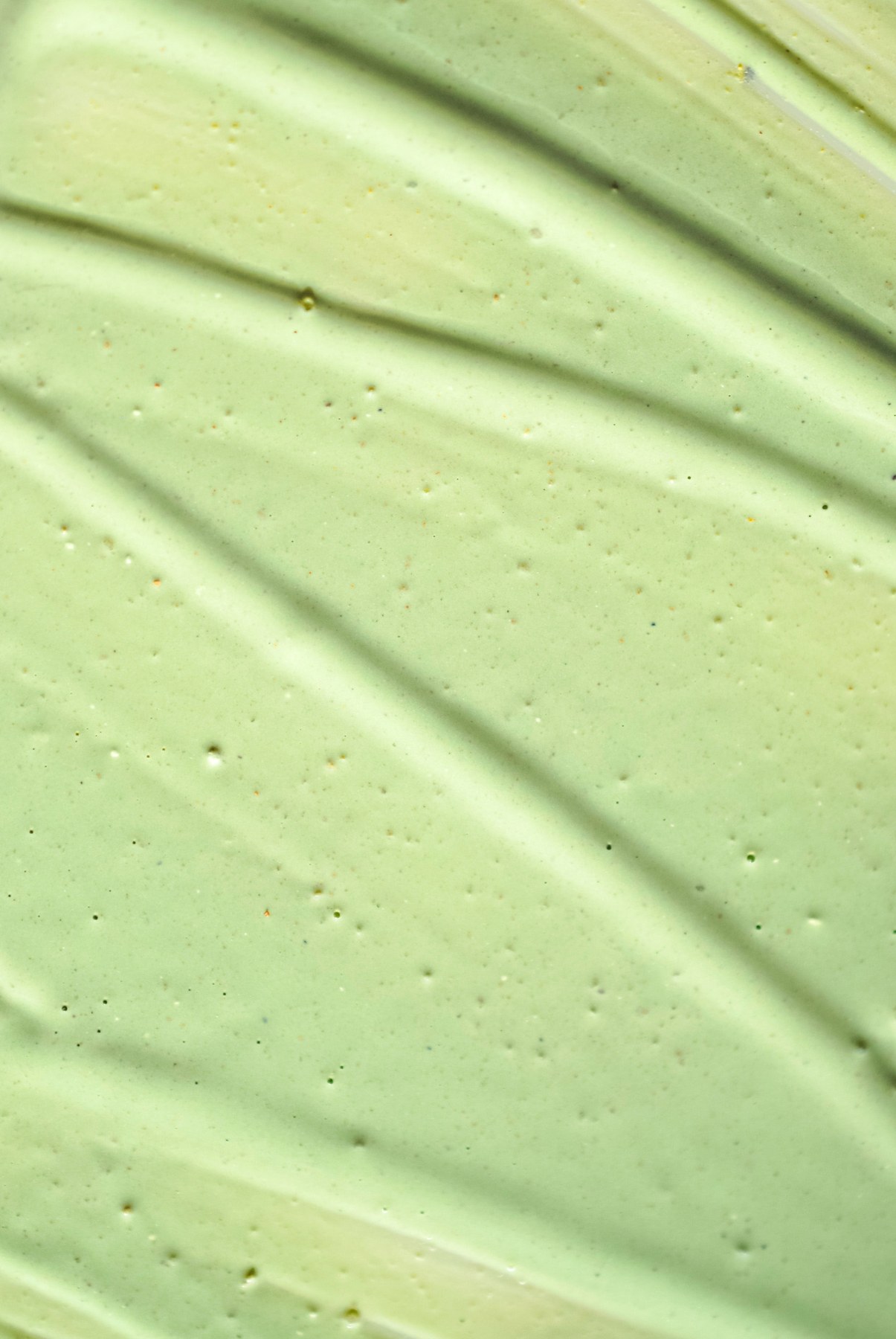
Your best seller page positions Earth Clearing Cleanser around zinc oxide, tea tree, niacinamide and Fuller’s earth clay for sebum and blemishes. What reason supports each of those four in a daily cleanser for complexions that mark with ease?
Earth functions as our daily workhorse because it performs routine labor without excess. Fuller’s earth clay supplies soft glide and assists in lifting surface sebum so pores appear more refined. Zinc oxide encourages a settled appearance, which counts when lesions leave the face looking flushed and patchy. Tea tree serves as our botanical core for blemish prone complexions. It carries a crisp herbal aroma and an extended record in blemish routines, and it allows the wash to feel effective without a stripped sensation. Niacinamide assists the look of sebum equilibrium and a more uniform tone. I designed a wash a person could apply twice daily while managing current bumps and prior marks together. It should rinse completely, leave the surface pliable, and prepare the next layer. When a wash leaves tension, the user abandons the following product. Ours encourages continuation.
You extended from lesions into tone with Honey Kojic Illuminating Cleanser built on honey plus kojic acid and Super Smoothie Brightening Serum built on lemon, strawberry and hyaluronic acid. Why treat brightness as the next step after breakouts, and what function does honey serve in a wash for melanated complexions?
Lesions represented only part of the concern for our buyers. In melanated complexions, a papule frequently resolves into a dusky mark that outlasts the bump itself. So expansion into discoloration care felt truthful, not like a separate revenue category. Honey Kojic answered that need inside a rinse off format. Honey contributes glide and pliability and allows the face to feel soothed through cleansing. Kojic acid assists the look of lingering spots and patchy tone. It applies like any wash, worked in and rinsed away, so it joins a regimen a person already follows. Super Smoothie applies the same reasoning in a leave on format, combining lemon extract and strawberry extract with hyaluronic acid to encourage a hydrated and more luminous appearance. I want a younger user to observe gradual change across weeks and regard the course as ordinary. Normalizing acne involves depicting women with bumps and residual marks and supplying consistent attention for both stages.
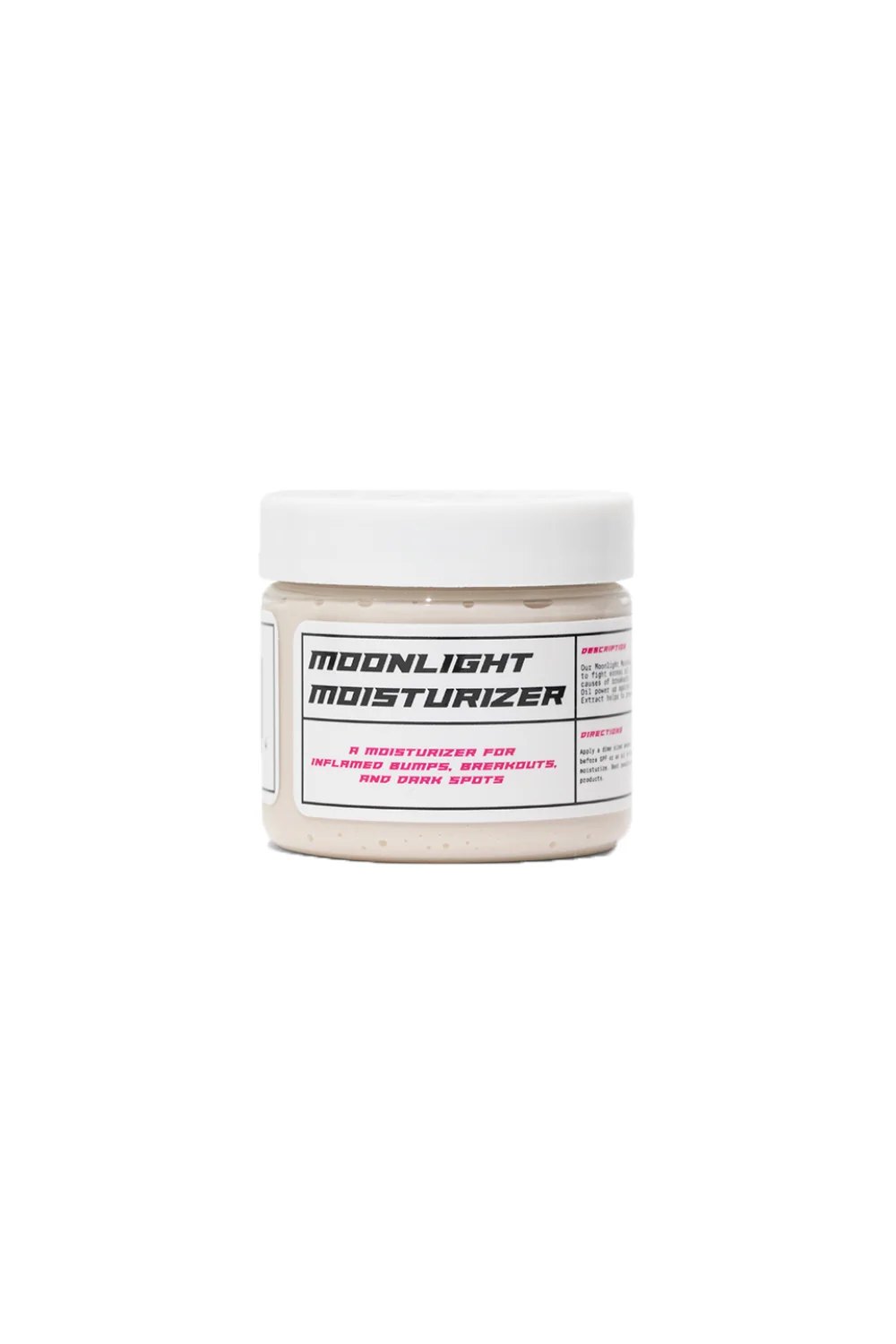
You keep Moonlight Moisturizer at eleven constituents with tea tree for blemish prone routines, niacinamide for sebum and licorice for visible brightness. Why maintain such a short list, and how should an oily and blemish prone user apply daily hydration without concern?
I discovered early that a longer list rarely helps reactive, blemish prone complexions. Moonlight contains eleven constituents because each must justify inclusion. Tea tree supports the sensation of a clearer regimen. Niacinamide encourages the appearance of steady sebum across hours. Licorice extract is the understated botanical I value. It assists visible brightness, which matters when prior spots keep the face looking mottled after bumps subside. Many in our community reported skipping hydration because textures felt weighty or uncertain. So we created one that spreads thin and absorbs. Apply it twice daily after washing, smoothing a modest quantity across the face and neck. When skin runs very oily, begin with a sheer film in daylight and a denser film in evening. The intent is supple, supported skin that accepts makeup or sunscreen cleanly and avoids midday shine.
When the label can persist without my narration, I will have completed the task.
Jamika Martin
You entered the Target Takeoff accelerator group in April 2018 after a market stall beginning and a UCLA summer program. What did direct selling teach you that still guides your formulation and naming choices?
I took part in a summer accelerator at my university, and that helped me progress from this farmers market arrangement. At an open table the feedback arrives immediately. A visitor lifts the jar, inhales, asks whether it stings, asks whether it addresses dark areas. No marketing language shields you. That period taught me to maintain plain names and brief regimens. Earth communicates its role. Honey Kojic communicates its contents and its purpose. I also learned to focus on a single retail channel at a time. We entered Urban Outfitters at an early stage, then pursued Target work, then a deliberate Ulta rollout. Expansion stayed incremental with no isolated breakout event. Every stage demanded improved panels, improved counts and improved replies to practical questions. I still develop with that stall in view. When I cannot describe a constituent to a nineteen year old in a single sentence, it likely has no place in that recipe.
You bootstrapped to one point seven million dollars in total revenue before accepting two million dollars from the New Voices Fund in 2022, and you have discussed planning to sell Rosen within about five years. How does preparing for acquisition alter your daily management?
I always understood I would eventually sell Rosen. That admission sounds direct, but it maintains clarity. Bootstrapping toward one point seven million dollars instilled restraint. Accepting two million dollars from the New Voices Fund provided capacity to expand deliberately. A five year horizon directs attention to returning purchasers, orderly documentation and recipes a subsequent owner can reproduce reliably. I avoid pursuing an isolated viral spike. I pursue refills. Earth and Moonlight replenish because they suit everyday life. Honey Kojic and Super Smoothie replenish because discoloration requires sustained attention. Later I founded Flora Studios in Austin, a development and production firm for emerging BIPOC labels, because I observed how difficult small batches are to place. Whether Rosen manufactures there or elsewhere, that effort made me more rigorous about counts, evaluation and records. Structuring for a future sale requires structuring for durability. When the label can persist without my narration, I will have completed the task.
You entered Ulta in April 2022 in roughly seven hundred doors with two fresh formulas for blemish prone skin and hyperpigmentation. You have noted that retailers must place more diverse founders on shelves while still learning how to collaborate with an indie label. How do you preserve independence at that volume?
Retailers carry growing responsibility for placing varied founders and labels on shelves. Many of those retailers still need to learn effective collaboration with an independent label. That assessment holds. Arriving in roughly seven hundred Ulta doors with two fresh formulas for blemish prone skin and hyperpigmentation marked substantial growth for a lean group. We protected independence by maintaining a compact assortment and a coherent account. We refused to introduce twenty stock units to appear larger. We carried targeted support for lesions and the traces they deposit. I seek a seventy to seventy five percent margin because retail partners can absorb as much as fifty percent of price, and that calculation informs each decision. You cannot include expensive botanicals at generous levels across an extended catalog and remain viable under that division. So we select fewer recipes, legible sizes such as four point three fluid ounces, and reliable sellers we can sustain. Remaining indie does not imply remaining tiny indefinitely. It implies selecting practices defensible at breadth.
Closing note from the desk
What remains is the discipline. Martin reasons like a formulator who started at an open table and retained that literal language inside chain retail. She avoids pledging flawless skin. She pledges repeatable care for blemish prone, melanated complexions, with plant extracts assigned defined roles and studied support where available.
ROSEN Skincare addressed a section that had stayed static for a decade. It responded with concise ingredient lists, represented faces and consistent replenishment, spanning a clay based wash to a weightless moisturizer to honey supported tone care. The operation continues from Austin, where limited batch logic meets broad distribution demands.
Product spotlight
Earth Clearing Cleanser, $18.99 for 4.3 fl oz, serves as the everyday wash for oily and blemish prone complexions. Fuller’s earth clay assists in lifting surface sebum while zinc oxide, tea tree and niacinamide encourage a clearer and more settled look. Apply twice daily, work across dampened skin and rinse fully before hydration.
Honey Kojic Illuminating Cleanser, $18.99 for 4.3 fl oz, serves as the tone focused second wash for the look of spots and patchy color. Honey cushions and maintains comfort while kojic acid encourages a brighter appearance through regular use. Apply once per day, work for thirty seconds, rinse fully and continue with hydration plus daytime sunscreen.

Julia Atkins
Julia produces the interviews at Face Value: the research, the question lists, the follow-ups. She will ask a founder for the concentration and the sample size, politely, and then wait.
More from Julia Atkins →