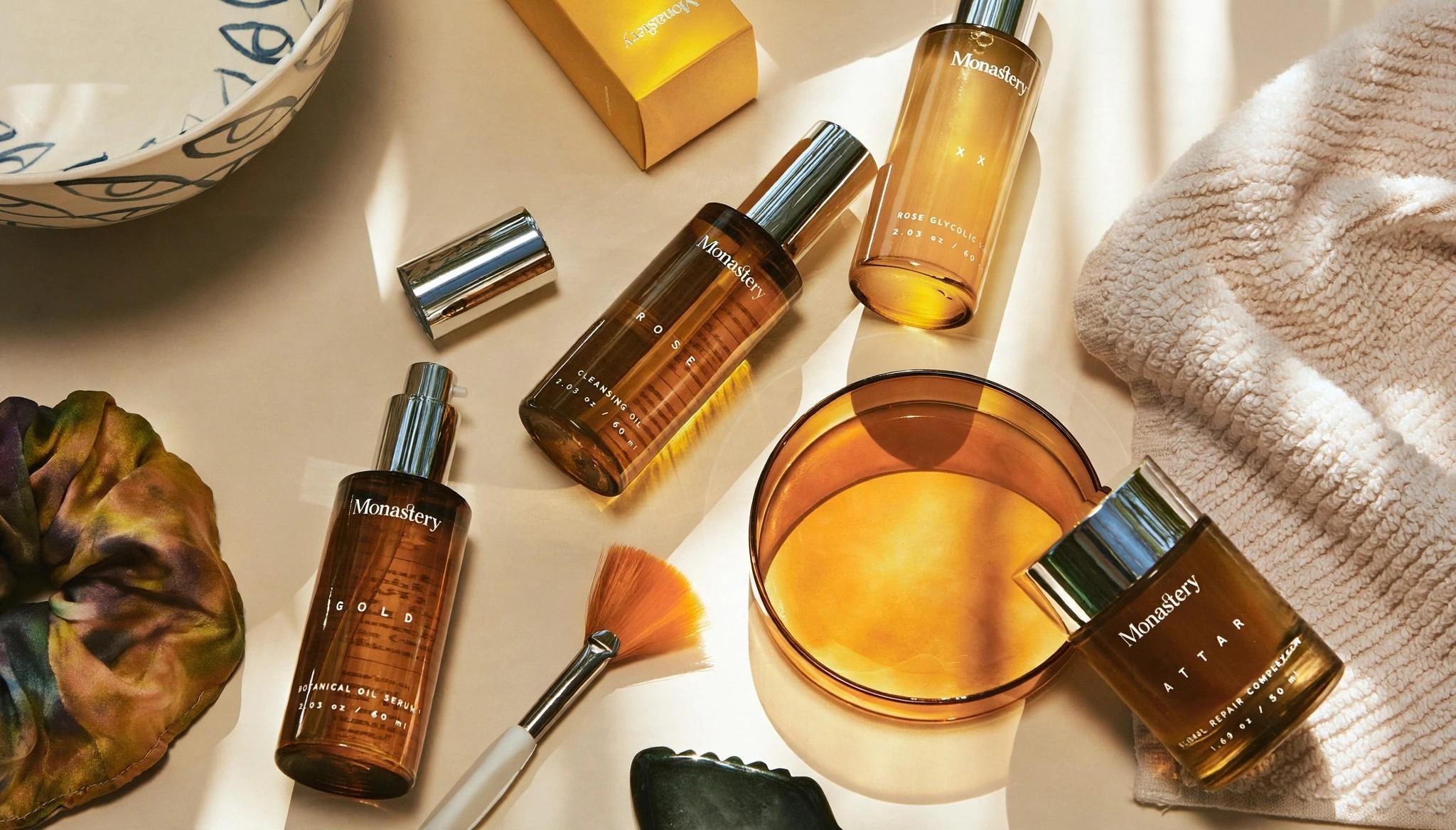
Rose Cleansing Oil pours slowly and smells of roses rather than perfume. That texture matters to Face Value because it signals what the formula avoids: no foam, no surfactant system, no shift in surface pH to obtain clean skin.
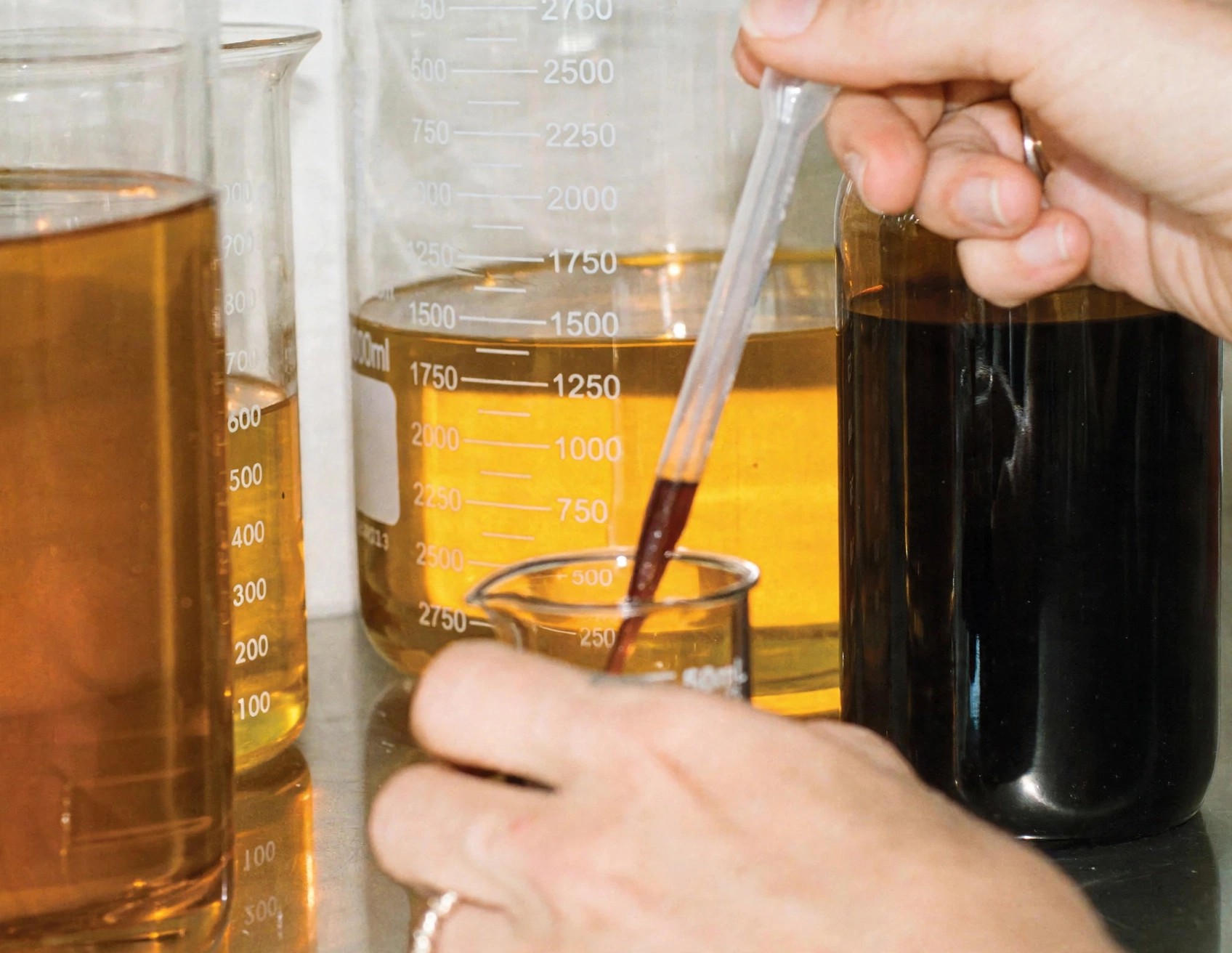
The work takes place in San Francisco, where blending, bottling and treatment happen in one studio and lab. A small in house team mixes oils in limited runs, keeps notes from the treatment room, and uses warm cloths and amber bottles during facials. The setting is practical before it is atmospheric, and the product line remains short by design.
Hewett entered this work as an esthetician at 19 and spent close to ten years as lead esthetician and spa director in a medspa that used pharmaceutical brands. Access to potent products did not prevent her own stage three, borderline stage four acne. That contradiction prompted label comparison, a full stop of products and water for about six weeks, then a return to her CIDESCO thesis on essential oils.
The method that followed stayed close to observation. She opened a skincare studio in San Francisco in 2011 for oil cleansing and water free moisturizing, adjusted hundreds of variations across five to six years, and retained six formulas requested repeatedly by clients. Childhood summers in Greece with her mother and grandmother, including visits to monasteries, gave the brand its name and its preference for fewer steps. In the literal sense, a monastery located in Greece.
Your studio history points to six client requested formulas refined across five to six years. Before we assess the data, what did those Greek monasteries show you about care that San Francisco later required.
My mom and I traveled to Greece nearly every summer to visit my Yiayia and Papou. Those visits still shape much of my thinking. The monasteries felt spare and calm. Objects were produced by hand. Beauty seemed to follow from care rather than from accumulation.
I trained in esthetics without initially planning to practice as an esthetician, yet I wanted proximity to that plant based world from childhood. My family kept herbs at home. My grandmother understood what to infuse and what to press and what to keep. When I later opened my studio in San Francisco, I sought a parallel state. A compact room. An unhurried sequence. Products that read as prepared, not processed.
The ingredient came quite literally from a monastery in Greece. That reference remains central. Monastery is intended as an interval. Reduced noise. Shorter routines. Sound materials treated with attention.
Six weeks without products or water preceded a return to your CIDESCO thesis on essential oils. How did study become practice again on actual faces.
That thesis never left me. I had studied essential oils in detail, their chemistry and customary applications. Once my skin settled during a period of no intervention, I had no wish to resume the regimen that had aggravated it. I wanted to rebuild around plants and oils capable of cleansing without removal of surface lipids.
The initial formula arose on a day when I specifically needed to remove sunblock from my face. I required full yet gentle removal. I therefore prepared a large molecule cleansing oil. That preparation became Rose Cleansing Oil. I next prepared Gold for pigmentation and scarring, since those marks remained.
In 2011 I opened a skincare studio in San Francisco to offer oil cleansing and water free moisturizing to patients. Across five to six years I revised hundreds of versions within a spa context. I observed responses over weeks rather than days. Client feedback selected six winners. Monastery grew from the treatment room outward in that manner.
About six weeks from stage three, borderline stage four acne to no active acne is a striking self report. What did close to a decade as lead esthetician and spa director using pharmaceutical brands compel you to reconsider about ingredients.
That period was sobering. I possessed high quality skincare and professional training in its application. I followed protocol as taught. My skin still progressed to stage three, borderline stage four acne. The pain altered my reading of formulas.
I began to place labels from separate brands side by side. To me they appeared nearly identical. I repeatedly observed surfactants and preservatives also present in household products. I started to question whether the foundation of the routine created the issue, rather than the active. Repeated stripping and preserving followed by further stripping seemed unlikely to produce settled skin.
In about six weeks, my face moved from stage three, borderline stage four acne, to no active acne. My intervention was cessation. I discontinued all products and water on my face. That pause created room for reflection. It oriented me toward cooperating with skin and its own healing system, rather than opposing it.
The warm damp cloth step defines the sensory part of cleansing oil that removes physically rather than chemically. For a reader new to oil cleansing, what should the hand and the skin perceive.
Our cleansing oil removes by physical action, instead of by chemical action. I prefer that people grasp the distinction tactilely. You work the oil over dry skin with massage. Sunscreen, makeup and daily accumulation loosen. Nothing foams or stings. Then a warm, damp cloth takes it away.
No squeak remains. Skin feels supple and undisturbed, not tight. Surface pH has not been altered and the barrier has not been stripped to achieve cleanliness. Material has been lifted and wiped. Afterward a modest amount of oil can nourish damp or dry skin.
I love creating beautiful things. And I get to do that work alongside the best people. For me that beauty involves texture. The oil ought to flow slowly. It ought to carry roses, not perfume. The cloth ought to be warm. The sequence ought to require a minute, morning and night, and produce calm.
Gold began with pigmentation and scarring after acne and centers on a singular ingredient approach. Which plant anchored Gold, and what did it demand from the remaining formula.
I tend to fall in love with one single ingredient and then build a product around that ingredient. In the case of Gold, that attachment concerned the appearance of repair. Following acne I retained pigmentation and scarring, and I sought oils able to support a more even appearance while maintaining comfort in dry skin.
I use rose and red raspberry seed oil among others because they feel refined and retain distinct character. Red raspberry seed oil offers a dry, soft glide that layers cleanly. Rose supplies aroma and the cue to slow the routine. Around a primary ingredient, I formulate with restraint. Modest support for the appearance of firmness. Modest support for softness. Nothing surplus.
That less is truly more. But with less, keep it at absolute top quality. With only a small number of oils in a bottle, every oil must justify inclusion. Every oil must be fresh, responsibly sourced and properly proportioned.
I began comparing labels from brand to brand. To me, they looked almost exactly the same.
Athena Hewett
Natural production costs far more than synthetic production and harvests vary. What does your refusal of tea tree oil, fillers, chemical emulsifiers, surfactants and preservatives cost, and what does it preserve.
The cost is higher, financially and operationally. Natural skincare costs far more to create than synthetic, and that is why so much synthetic lab skincare exists. Quality plant oils carry higher prices. They differ across harvests. They require careful storage. They prevent reliance on texture builders.
The preservation is simplicity. Oils rank among the most potent, healing, and exquisite kinds of natural ingredients. Without fillers of any kind, the bottle contents correspond directly to what contacts skin. Without chemical emulsifiers or surfactants, skin avoids daily contact with a foaming system.
I also refuse tea tree oil because I consider it too harsh for the faces I treat. My clients frequently present as acne prone while also dry or sensitive. They require consistent cleansing and consistent nourishment. Healing Botanical Skincare names our task because the work involves helping skin to heal, repair, and nourish itself with fewer, better steps.
Your San Francisco lab blends by hand and you describe steep to bottle control. Walk us through a batch, from steep to bottle, and how readiness is judged.
Everything is produced by hand inside our San Francisco lab. We produce small batches to allow assessment of aroma and feel in each blend. We heat oils gently where appropriate, we infuse, we allow resting, then we evaluate scent, color and slip on skin. When the result is incorrect, we revise or withhold it from bottling.
We retain notes from the treatment room. That space serves as our testing ground. A formula may pass through many iterations before it receives a name. Skin. Care. That phrasing reflects my model, with a pause. Wash with oil. Press in oil. Allow skin to rest.
Readiness rests on client feedback over time. Is makeup removed fully. Does skin appear calm by morning. Does aroma persist without becoming sharp. We introduced winners because clients continued to request them. That criterion still applies.
Backstage at fashion weeks and hotel residencies now takes you to New York and Paris, with Khaite, Kallmeyer and Victoria Beckham plus the Skin Sanctuary pop up with Semaine. How does a slow ritual function backstage.
Backstage moves quickly, yet skin still responds to unhurried preparation. I prepare skin with the same sequence used in the studio. Oil cleanse to remove existing layers. Press a thin layer to support the appearance of smooth, rested skin. Allow settling prior to makeup. Models commonly show dryness linked to travel and shows, and this method provides a soft base without weight.
Serving as resident esthetician at The Hotel Chelsea in New York permits one to one work, which I value. Paris followed a similar pattern. The Skin Sanctuary pop up in partnership with Semaine offered a quiet room during a crowded week. Warm cloth. Hands. Breath.
Creative clients rely on tactile signals. They seek no sting or film. They seek skin that appears like skin. Oil aligns with that aim. It supports the appearance of glow without masking.
A preference for taste over data and the view that you cannot change much about skin sit together in your statements. How do those two positions inform a routine you would actually prescribe.
You can change little about your skin, so stop trying. I offer that statement as relief. Much skincare advertises a new face. I prefer to support a calm, soft and cared for version of the existing face. That requires a short routine executed well.
I would rather make decisions by taste than by data. By taste I mean selection of what feels correct and beautiful and retention over years. Data holds a role, but it can drive brands toward claim pursuit. I prefer a cleanser used with pleasure, an oil matched to the skin, and rest.
A simple prescription looks like this. At night, massage Rose Cleansing Oil over dry skin and remove with a warm cloth. Press in a few drops of Gold or your selected oil. In the morning, rinse lightly or cleanse again when necessary, then apply a small amount of oil. That suffices. Consistency performs the work.
Closing note from the desk
What remains is a testable sequence: cease stripping, cleanse with oil, moisturize without water, observe over weeks. Hewett reports her own severe acne calmed after she paused products and water, then she evaluated hundreds of oil blends through client feedback before selecting six. Greek monasteries supplied the model of restraint. San Francisco supplied fixed conditions for mixing and follow up.
Monastery aims to cleanse and moisturize with oils that work with skin and its own healing system. It omits fillers, surfactants and harsh routines, and accepts higher costs for natural materials and small hand blended batches. From an evidence view, controlled trials, concentrations and sample sizes are still absent here, so claims remain at the level of appearance and comfort rather than proven change.
Product spotlight
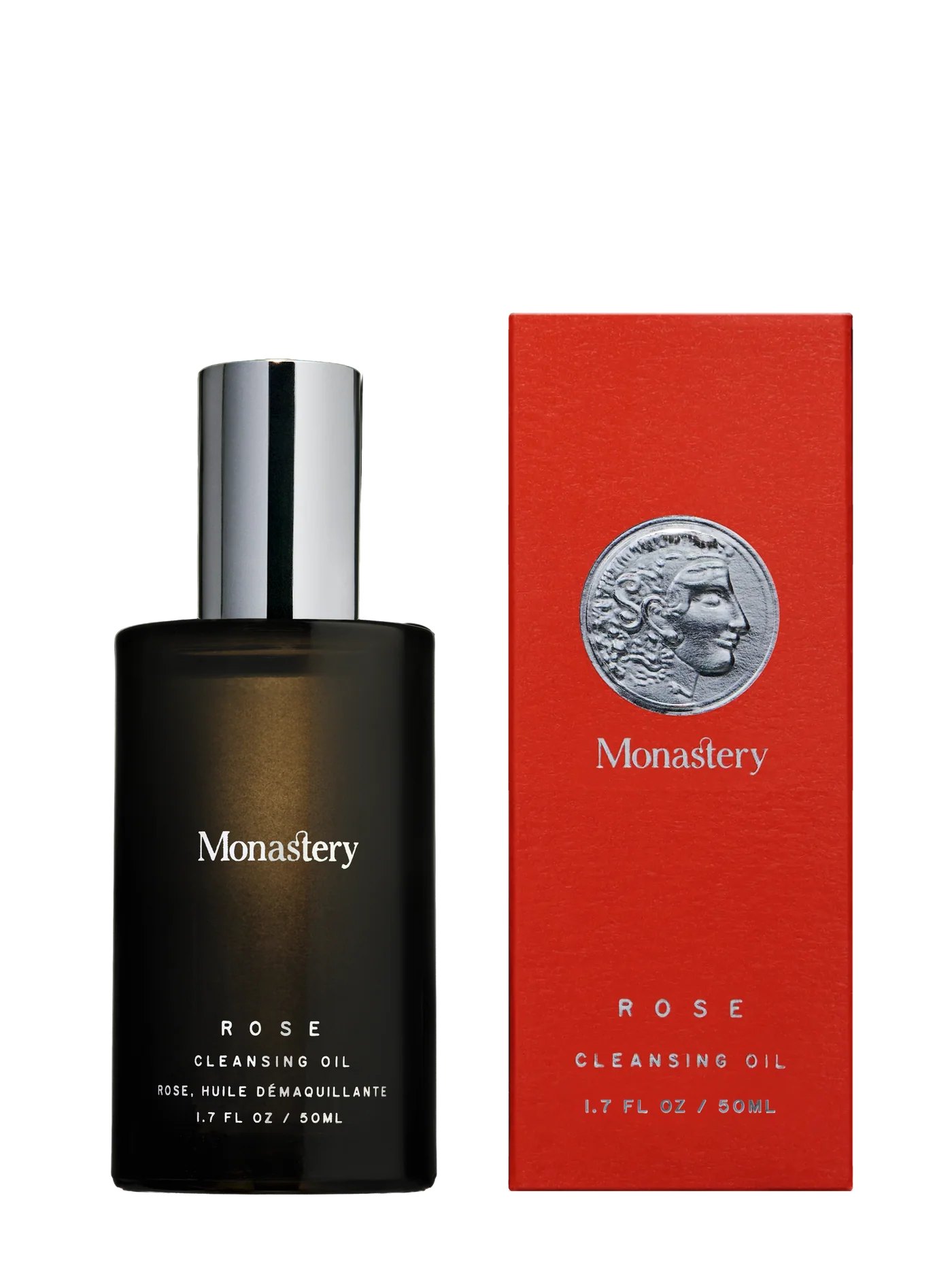
Rose Cleansing Oil represents the initial Monastery formula, a large molecule cleansing oil originally prepared to remove sunscreen. It is massaged over dry skin to lift makeup and sunscreen physically rather than chemically, then cleared with a warm damp cloth. Apply at night, then moisturize with a few drops of oil.
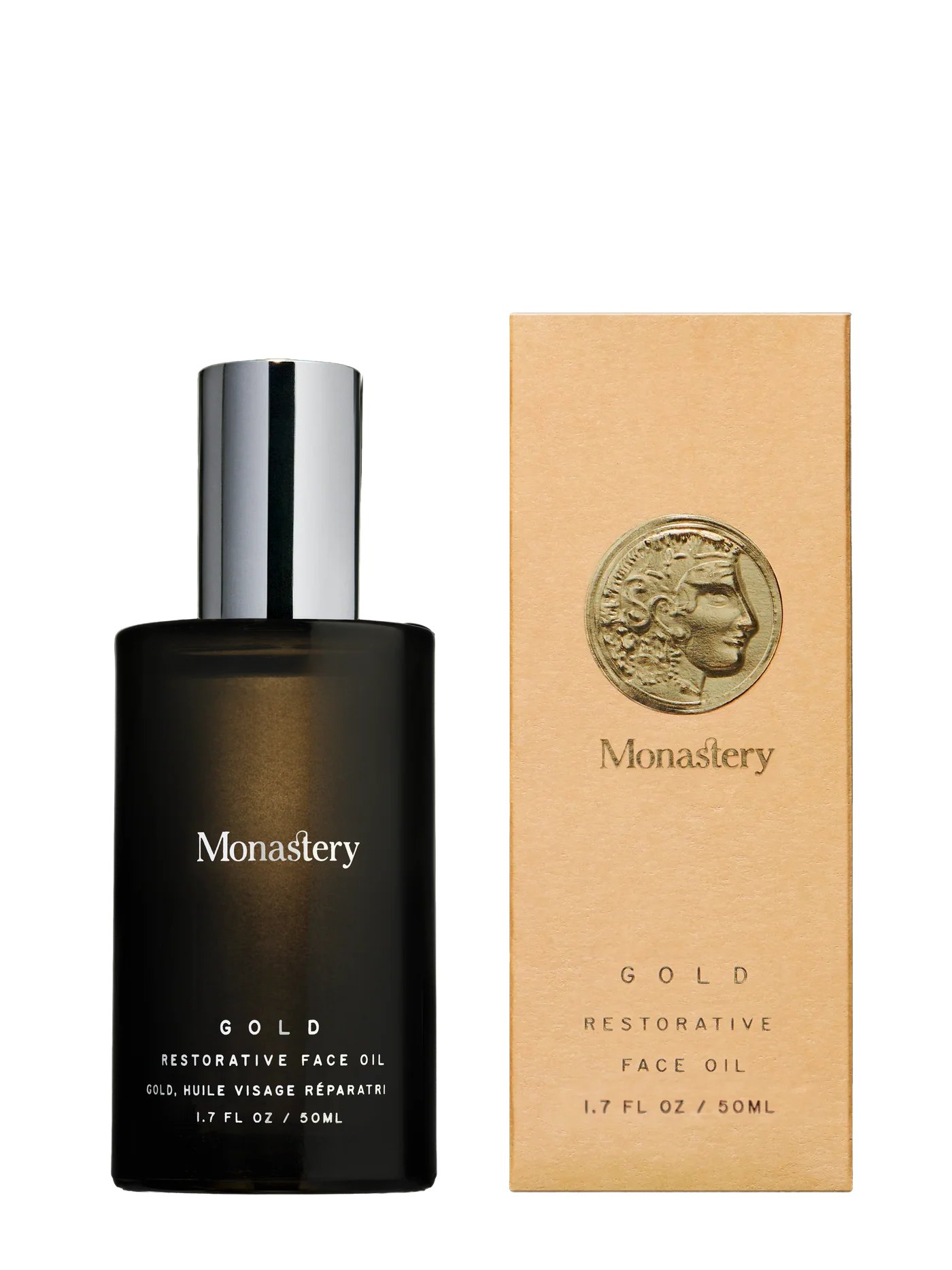
Gold Botanical Oil is positioned after cleansing as a water free moisturizing option for dry, sensitive and acne prone skin showing marks and uneven tone. It features prized plant oils including rose and red raspberry seed oil for softness and the appearance of calm. Press two to four drops into skin morning and night.

Julia Atkins
Julia produces the interviews at Face Value: the research, the question lists, the follow-ups. She will ask a founder for the concentration and the sample size, politely, and then wait.
More from Julia Atkins →